
Healthy & Balanced Diet
A healthy diet must be balanced, which means it must include all food groups in the right proportions: proteins, carbohydrates, fats, and various vitamins and minerals. Eating a variety of foods is an important part of a balanced diet.
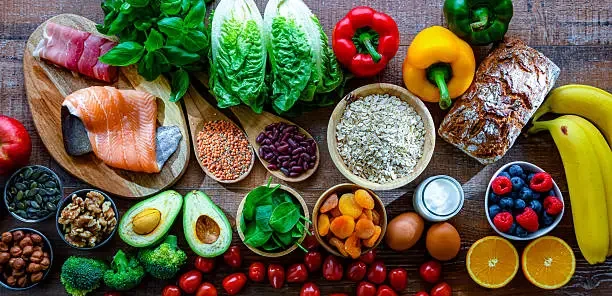
A balanced diet should not take precedence over a healthy, whole-food diet. This means foods that are as close to their natural state as possible and as minimally processed—or completely unprocessed—as possible. Whole foods contain all the essential macronutrients (in addition to fiber, minerals, vitamins, and other phytonutrients), and by including a variety of plant- and animal-based foods in our diet, we provide our bodies with all the necessary nutrients and energy in the best possible form.
The muscles and bones that make up the skeleton are active, living tissue that constantly renews itself throughout our lives, ensuring that we remain strong and full of vitality. To achieve all this, our body needs a healthy mix of vitamins, minerals, and other nutrients.
We often don’t realize that without the necessary nutrients, the musculoskeletal system will eventually begin to falter. The food we eat provides the fuel our body needs to nourish our muscles and to repair and grow tissues. The proteins in food are broken down into amino acids, the building blocks of bones, cartilage, and muscles.
Nutrition is crucial in combination with physical activity, especially when it comes to sculpting the body and gaining strength and lean muscle mass. For example, during anaerobic training (with weights, bodyweight exercises, or explosive movements), muscle tissue is torn and must regenerate and grow. Without adequate nutrients, this process becomes significantly more difficult for the body, and as a result, the vast majority of the effort put into physical activity goes to waste.
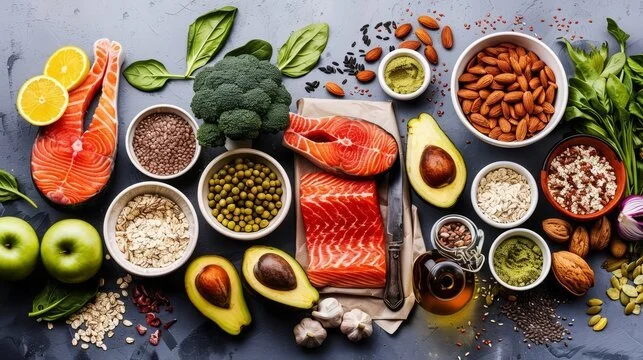
The most important thing is to find a balance in our diet, not to overdo anything, and to ensure that each meal has a rough balance of macronutrients and micronutrients. Here, we can use the 80/20 rule as an example, where 80% of what we eat is healthy, “clean” food, and 20% is when we treat ourselves and indulge— After all, we enjoy food (even the less healthy kinds)—we look forward to it, and it’s also an important part of our social lives. So it’s okay to treat ourselves and unwind, but all within a reasonable balance and with the knowledge that we’ll get back on the 80% track—or back on the right path.
A “balanced diet” is the most important factor for long-term health and one’s lifestyle. There are countless diets, and many people decide to try various diets at some point in their lives. Almost all diets are ineffective in the long run, as they usually require an individual to make a sudden and drastic change in their eating habits, which can be a shock to the body and mind (we exclude professional athletes and competitors here, who need strict diets to achieve their high goals). Anyone who is serious about dieting sticks to it strictly and notices obvious physical changes. The question arises, however, once the diet cycle is over. What happens then? Often, the individual reverts to old habits, or their diet even deteriorates, causing their weight to rebound to where it started—or even higher—and the body’s physiological processes consequently deteriorate. This claim is backed by a vast amount of statistics that prove it. Furthermore, most diets are very poorly designed in terms of the body’s needs for the quantity and intake of macronutrients and micronutrients.
Various “miracle diets” are also a very popular commodity. On the one hand, society encourages us to overeat and be less active; on the other hand, it glorifies thinness. Marketers skillfully exploit this with various weight-loss products and supplements that offer seemingly simple solutions—effective diets and products that lose weight for us. If any miracle product really worked, obesity wouldn’t exist. Although the desire to lose weight stems from a desire to look good, the health benefits resulting from achieving this goal are far more important. In theory, weight loss is a relatively easy goal to achieve, as it simply involves reducing energy intake (a caloric deficit) and increasing energy expenditure.

In practice, however, losing weight is difficult for most people, as the weight-loss process is influenced by a number of factors.
*Social
*Economic
*Physiological
*Psychological
*Emotional
factors can prevent the successful implementation of a weight-management program. Eliminating just one factor can potentially create other obstacles that are independent of the original factor, or the factors may act cumulatively, thereby hindering the implementation of the original weight-loss strategy. Therefore, it is important to understand how each individual factor affects energy balance, which aids in successful weight management.
The most common unhealthy eating habits:
*inappropriate food intake (on average, more than 10,000 kJ per day; conversely, in cases of disorders such as anorexia or bulimia, a severe deficiency)
*inappropriate food choices (excessive consumption of sweets and other processed foods, fatty meat and dairy products, foods made with white flour, lack of vegetables and fruit...)
*unbalanced meal composition
*an eating regimen that is inappropriate for the individual and their habits
*diets
*inappropriate fluid intake (consuming less than 2 liters of fluids per day, caffeinated beverages, and sugary, artificially sweetened drinks)
*lack of access to wholesome foods
*emotional overeating

The decision to eat a healthy and balanced diet must be made consciously and without any pressure. Both health and illness are not limited to individual organs; rather, they are connected to our attitude toward life, the circumstances in which we live, and our overall lifestyle.