
Cold Therapy
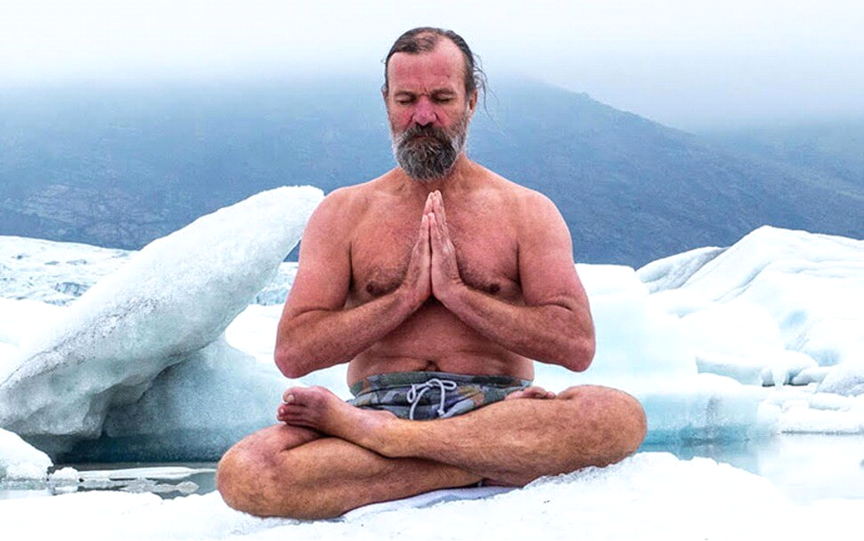
EXPOSURE TO COLD
Now that we’ve wrapped up the chapter on breathing with Wim Hof, let’s delve a little deeper into the topic of cold exposure, its benefits, and the science behind it.
Cold exposure is quite popular among health-conscious people, ranging from cold showers and swimming in icy water to cryotherapy. They do this for good reason, as cold exposure can boost fat burning, protect nerves, strengthen the immune system, and more.
What is cold therapy?
Cold therapy is not a new invention; it is one of the oldest medical treatment methods. The Edwin Smith Papyrus (3500 BCE), the oldest medical text, mentions cold therapy several times.
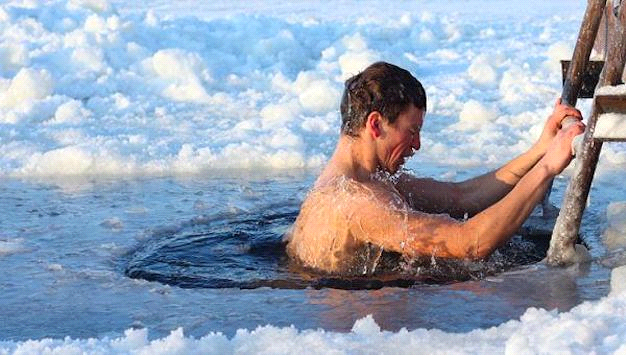
However, until the late 1980s, exposure to cold remained relatively unrecognized in modern allopathic medicine.
Recently, cold therapy has been used more and more frequently to prevent or alleviate various types of neurological damage.
Nevertheless, many of the benefits of cold therapy remain relatively unknown and untapped. In this article, I’ll try to show you how you can use cold exposure to optimize your health and performance.
The Benefits of Cold Exposure
Read all about why it’s worth incorporating the Wim Hof Method into your daily routine.
Feeling low on energy, constantly tired, or just generally down? You’ve probably heard some enthusiasts constantly talking about cold water. It might sound a bit over the top, but since interest in cold-water therapies has been on the rise since 2018, now is the time to read up on the many alleged health benefits.
Cold water seems to cure everything from promoting longevity to improving metabolism. Some people with eczema have even found that regularly immersing themselves in cold water helps with their flare-ups and now swear by this ritual.
The positive effects of cold exposure:
In addition to promoting faster recovery, cold water therapy is said to:
*Strengthen the immune system
*Improve blood circulation
*Deepen sleep
*Boost energy levels
*Reduce inflammation
*Improve metabolic function
*Improve mood
Dr. Barnish, who is himself a cold-water enthusiast, calls cold-water therapy the “elixir of life.” But why?
“Leading laboratories around the world are discovering that brief exposure to cold water—or the absence of it—extends life expectancy. Exposure to uncomfortably low temperatures—the key word here is ‘uncomfortable’—activates longevity genes that play a role in our survival response, a key factor that ensures our DNA is repaired before new cells are formed,” he says.
Barnish adds that cold water can promote positive metabolic changes in the body and help with skin conditions such as acne and eczema.
Okay, but which benefits have been scientifically proven?
It’s good to discuss the potential benefits of cold therapy, but what have researchers actually proven so far?
The Beginnings of Scientific Research
What “Ice Man” Wim Hof is capable of was long considered scientifically impossible. It wasn’t until the first study at Radboud University in 2011 that things really took off.
The study showed that Wim was able to voluntarily influence his autonomic nervous system using his method—something that had been considered impossible until then. This groundbreaking finding, published in the journals PNAS and Nature, established credibility, literally rewrote biology textbooks, and sparked the curiosity of scientists.
Since then, numerous researchers have become interested in the potential benefits of Wim Hof’s method. Today, Wim and his team continue to collaborate with research institutions, and various promising studies are currently underway.
Radboud University—Netherlands [2014]
The goal was to determine whether the results of the first study on Wim’s group could be replicated with a larger group.
*12 practitioners of the Wim Hof Method were injected with endotoxin
*The results showed that, like Wim, they were able to control their parasympathetic nervous system and immune response
*Anti-inflammatory mediators were 200% higher, while pro-inflammatory mediators were 50% lower
*Potentially significant implications for “conditions associated with excessive or chronic inflammation, particularly autoimmune diseases.”
Wayne State University – Netherlands [2018]
Also known as the “Brain Over Body” study.
The aim of the research was to understand the brain mechanisms that enable Wim to tolerate extreme cold exposure.
Wim was dressed in a special temperature-controlled suit and placed in an fMRI scanner and a PET scanner.
The results showed activation of brain regions associated with pain suppression, self-reflection, and well-being, particularly the periaqueductal gray (PAG).
This could have implications for “lifestyle interventions that could improve several clinical syndromes.”
Other studies that have been conducted and those currently underway
2007 - Study: Feinstein Institute: Blood tests during meditation and breathing exercises
2009 - Letter: Blood tests during meditation and breathing exercises in New York, led by Dr. K. Kamler & G. Stewart.
https://www.wimhofmethod.com/cache/uploads/kcfinder/files/WHM_DataInfo%20Kamler.pdf
2012 - Article: The Effect of Concentration/Meditation on the Autonomic Nervous System, Activity, and Innate Immune Response
https://www.wimhofmethod.com/cache/uploads/kcfinder/files/WHM_Hopman.pdf
Article: Frequent Exposure to Extreme Cold, Brown Fat, and Cold-Induced Thermogenesis: A Study of Identical Twins
https://www.wimhofmethod.com/cache/uploads/kcfinder/files/WHM_BrownFat.PDF
Article: Controlled Post-Exercise Hyperventilation May Accelerate Altitude Acclimatization
https://www.wimhofmethod.com/cache/uploads/kcfinder/files/Kilimanjaro.pdf
2014 - Article: Voluntary activation of the sympathetic nervous system and suppression of the innate immune response in humans
https://www.wimhofmethod.com/cache/uploads/kcfinder/files/PNAS.pdf
2015 - Article: The role of expected outcomes of a training program consisting of meditation, breathing exercises, and cold exposure in the response to endotoxin administration: a proof-of-concept study
https://www.ncbi.nlm.nih.gov/pmc/articles/PMC4819555/pdf/10067_2015_Article_3009.pdf
Research - Inflammation and Pain
At Radboud University Medical Center in Nijmegen, the Netherlands, researchers are wrapping up a new study on the effects of various WHM ingredients on inflammation and pain.
Research - Brain Activity
Wayne State University in Michigan, USA, is measuring the effect of WHM on brain activity. This study consists of two parts: 1. The effects of isolated cold exposure. 2. The effects of cold exposure combined with WHM breathing exercises and a positive mindset.
Research - WHM on Mental Health and Stress Resilience
The University of California, San Francisco, is measuring the impact of WHM on mental health and stress resilience.
Article: “Involvement of lactate and pyruvate in the anti-inflammatory effects exerted by voluntary activation of the sympathetic nervous system.” (Involvement of lactate and pyruvate in the anti-inflammatory effects exerted by voluntary activation of the sympathetic nervous system) Metabolites 2020.q
https://www.mdpi.com/2218-1989/10/4/148/htm
2019 - Article: “Battling Arthritis” - A supplementary training program that includes breathing exercises, cold exposure, and meditation reduces inflammation and disease activity in axial spondyloarthritis.
There are also many other studies. One study concluded: "A small 2011 study of cyclists found that cold-water therapy reduces symptoms of muscle pain or delayed-onset muscle soreness.
“So if you're in a lot of pain after a workout—especially when you're trying out a new sport or have taken a break from it—a cold shower can help prevent soreness later on.”
How does it work? They explain that cold can help numb the pain by constricting blood vessels, which in turn helps reduce swelling. That’s why ice is an excellent remedy for everything from bee stings to sprained ankles.
Dr. Barnish emphasizes that more research is needed on the benefits of extreme cold, but there is plenty of research available on the benefits of occasional uncomfortable cold and on how cold can stimulate healthy brown fat. “A team of scientists at the University of California is researching this field exclusively,” she adds.
If cold-water therapy is so great, why doesn’t everyone do it?
That’s an age-old question. Simply put, there are several reasons for this. It may not be common in the United Kingdom, but, as Dr. Barnish points out, Scandinavians have been practicing cold-water therapy for centuries, as have many countries with colder climates, such as Chile and Canada. “Instead of a shower or bath, they use the wild open waters.”
Another major reason is that most people don’t delve into the subject itself and don’t ask themselves why this might have a positive effect on their lives.
Among other reasons, there’s also the fact that getting into cold water is simply unimaginable and very unpleasant. Many people ask themselves, “Why would I do that? Am I crazy? I’ll get rheumatism, catch a cold, etc.” That’s why I’m going to explain the science behind it and why it’s worth considering adding this to your life.
1) Helps Burn Fat
Humans have reserves of active brown adipose tissue (BAT). Unlike white fat, which stores energy and makes up most of the body’s fat, brown fat is active in burning calories and expending energy.
BAT can essentially convert calories from food into heat.
Studies show that exposure to cold increases BAT activity, which in turn increases calorie expenditure. Researchers have concluded that frequent exposure to cold could be an acceptable and cost-effective complementary approach to addressing the current obesity epidemic.
According to previous research, a lack of BAT is associated with obesity.
Exposure to cold increases thermogenesis, both shivering and non-shivering. These processes increase calorie expenditure.
Exposure to low temperatures leads to increased levels of adiponectin, a protein that promotes fat burning. Low levels of adiponectin are associated with obesity.
In one study, the metabolism of individuals exposed to cold stress increased by 80% compared to those in a “warm” environment.
In one study, rats exposed to cold burned enough extra calories to eat 50% more than the control rats, yet they still weighed less than the controls.
2) Fighting Inflammation
Exposure to low temperatures increases adiponectin, a protein that fights inflammation.
Another study showed that exercising in the cold reduces the inflammatory response observed in a normal-temperature environment.
The same study showed that, after a certain amount of time, exercising in the cold can actually increase the inflammatory response, so moderation is important.
3) It May Promote Longevity
A study showed that fruit flies lived twice as long when kept at 21 °C as when kept at 27 °C.
Similarly, a study on worms found that lowering the temperature by 5 °C extended lifespan by 75%.
Numerous studies on insects have also shown a negative correlation between higher temperatures and lifespan.
It appears that fish also live longer at lower temperatures. For example, one study showed that a 6 °C drop in temperature extended the average lifespan of fish by 75%.
In 1986, a researcher submerged his laboratory rats in shallow cold water for four hours a day. The rats burned so many extra calories that they ate 50% more
compared to the control rats. The rats exposed to cold still weighed less than the control rats and lived 10% longer.
In another study, the core body temperature of mice was lowered by 0.3 °C (males) and 0.34 °C (females), resulting in an increase in average lifespan of approximately 20%.
The increase in lifespan due to exposure to cold may be a result of hormesis. Hormesis refers to a paradoxical adaptation whereby animals become stronger and more efficient when exposed to environmental stressors.
Other researchers favor the “rate-of-life hypothesis.” This theory posits that lower temperatures promote longevity by slowing the reaction rates of various metabolic processes. This results in fewer metabolic byproducts, such as reactive oxygen species.
Another possibility is that the increased longevity resulting from cold exposure is due to the modulation of genes such as TRPA-1 and DAF-16.
Promising animal studies in this area should spur further research and clinical trials to investigate the anti-aging effects of cold exposure in humans.
4) Strengthens the nervous system
The increase in fat burning during exposure to cold regulates the sympathetic nervous system. Cold temperatures act as a mild “workout” for the nervous system, which adapts and becomes stronger.
5) May support and accelerate recovery
The physiological effects of cold therapy include increased blood flow, reduced swelling, inflammation, muscle spasms, and metabolic demands.
There is some preliminary evidence that ice and exercise are effective in increasing the rate of healing after an ankle sprain or surgery.
Exposure to cold has a positive effect on muscle enzymes associated with muscle damage (e.g., creatine kinase and lactate dehydrogenase).
One study examined 360 people who either rested or immersed themselves in cold water after resistance training, cycling, or running. A 24-minute cold-water bath (10–15 °C) prevented post-exercise muscle soreness.
This approach is becoming increasingly popular among professional athletes.
6) Regulates blood sugar levels
One study showed that adiponectin levels increase by 70% after exposure to cold. Adiponectin is a protein involved in regulating blood glucose; low levels of it are often associated with insulin resistance.
In studies on rats, exposure to cold increased glucose uptake in peripheral tissues. Thus, exposure to cold may be beneficial during fasting, as fasting can cause peripheral insulin resistance.
Exposure to cold can improve the body’s response to insulin, allowing for more efficient removal of glucose from the blood.
7) Improves sleep quality
Natural daily temperature fluctuations are an important regulator of sleep cycles.
However, one study on cold exposure showed that the body releases cortisol when exposed to cold, while another found that elevated cortisol levels at night can lead to poorer sleep. This could mean that a cold shower before bed is less beneficial for sleep.
Therefore, exposure to cold is most recommended in the morning or midday; as a result, this can improve the quality of sleep at night, since we are much more energetic and active during the day.
8) Strengthens the Immune System
One clinical study examined the effects of six weeks of cold-water immersion (14°C for 1 hour) on the immune system. Participants showed increased levels of IL-6, CD3, CD4, CD8, and activated T and B lymphocytes, indicating a more active immune system.
Exercising before cold exposure enhances the immunostimulatory effects of cold therapy.
9) Combating Oxidative Stress
One study showed that people who regularly swim in ice-cold water have relatively high levels of reduced glutathione, an antioxidant that is crucial for detoxification.
Cryotherapy can improve antioxidant status, enabling the body to combat free radicals more effectively.
10) Reduces Pain
According to anecdotal evidence, cold showers significantly improve the quality of life for patients suffering from phantom limb pain.
Cold compression therapy provides greater pain relief than popular alternative treatments.
The application of cold alone can be effective in reducing pain associated with migraine attacks.
Exposure to Cold and Willpower
This benefit is anecdotal and not supported by scientific research.
Many people have noticed that their willpower has increased significantly as a result of regular cold showers.
No one wants to take a cold shower. But standing under ice-cold water every morning trains your brain to do things it doesn’t spontaneously want to do. This mindset can be applied to other areas of your life as well.
Recommendations and Precautions for Cold Exposure
Just to be clear, I do not recommend sudden immersion in cold water to anyone who is not experienced. This can cause dangerous and even fatal changes in breathing and heart rate, known as the cold shock response.
Be cautious with any sudden temperature changes in your environment, especially if you have a heart condition or other chronic illnesses. Consult your doctor before making major changes to your daily routine.
Exposure to cold should be increased gradually.
I recommend starting with a cold shower. Begin by showering normally with lukewarm or warm water, then at the end, turn the faucet to cold (not quite freezing) and try to last at least 15 seconds the first time. Always finish with cold water, never with warm.
Then gradually increase the duration by trying to last at least 5 seconds longer each day. Shower every day first thing in the morning, or later in the day if it’s too uncomfortable for you. Always shower with warm water in the evening.
The goal is to be able to stand under cold water for at least 30 seconds after about a week; you can then increase this each week—for example, to 1 minute, a minute and a half, and even up to 2 minutes. Once you finally work up the courage and your body gets used to the cold and the initial shock of the cold water, you can turn the faucet all the way to the coldest setting.
You can do this even sooner if it feels good. I would like to emphasize, however, that for anyone who may have a heart condition or an untrained cardiovascular system (meaning prolonged physical inactivity, being overweight, poor physical condition, avoidance of discomfort and various shocks, etc.), it’s essential to begin exposing yourself to the cold very slowly and gradually. Over time, every body adapts and improves, though this, of course, depends on the individual.
Let this become part of your daily life and routine—if only for the feeling itself and the positive effects, which you’ll notice on your own anyway. For anyone who wants to take this therapy a step further, there’s always (especially in winter) ice-cold water to immerse yourself in. This could be the ocean (around 8–10 degrees in winter), lakes, streams, or an ice bath you set up at home.
One more important point: if you don’t feel comfortable, don’t worry—you can skip the cold shower for a day or two, or simply reduce your exposure time. The main goal is to develop this habit and live this way, not to break any records—especially not in a short period of time.